
The Future of Soil Stabilization
Warp Knitted Geogrid-Geotextile Composite
Product Introduction
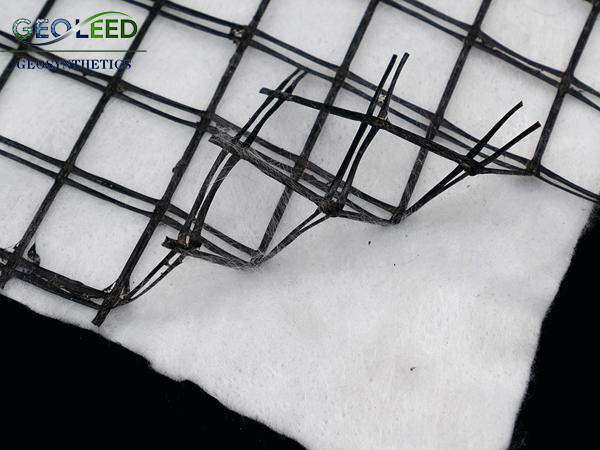
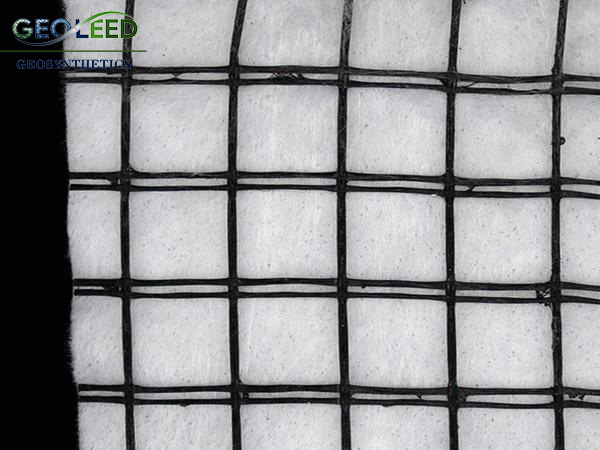
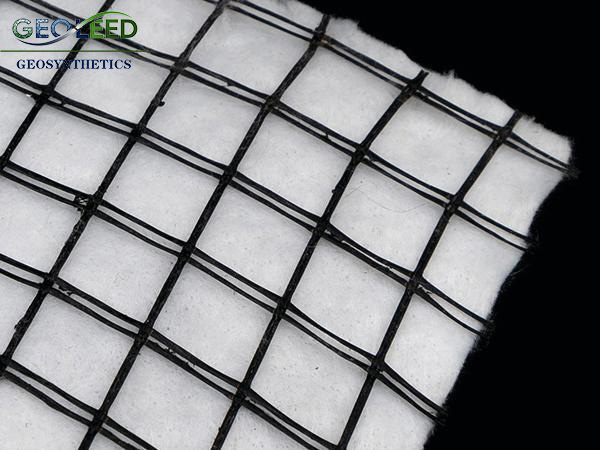
Warp-knitted geogrid-Geotextile composite is a “high-performance special forces” material among geosynthetics.
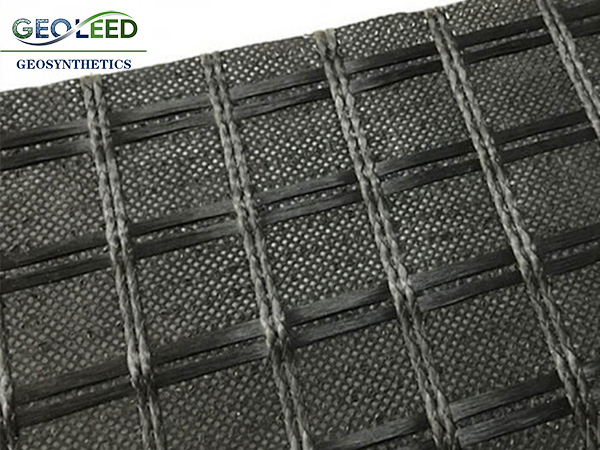
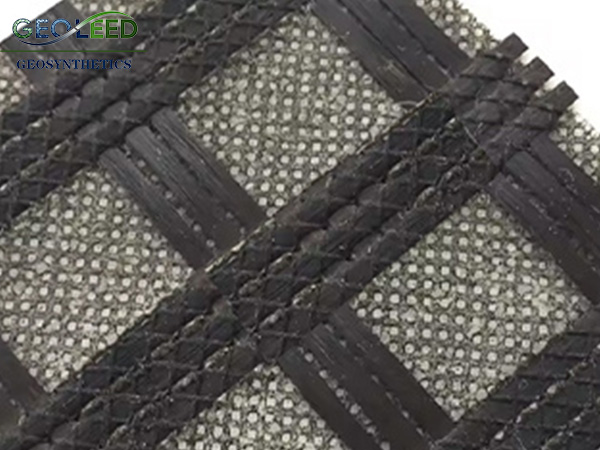
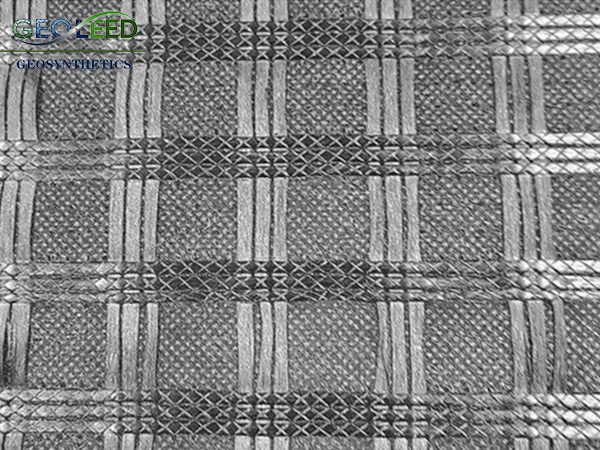
Its biggest difference from ordinary plastic geogrid composite fabric lies in its manufacturing process: it is made of high-strength polyester fiber (PET) or glass fiber through warp knitting and directional weaving, resulting in higher strength and greater stability.
Core: High-modulus, high-strength synthetic fibers (such as polyester filaments or glass fiber) are used as the reinforcing skeleton.
Warp Knitting Process: Warp and weft yarns are tightly woven together using a warp knitting machine, with high-strength fibers used to bind the knots.
Lamination: A layer of nonwoven geotextile is thermally bonded during or after weaving.
Coating: The surface is typically coated with a high-quality sealant or modified bitumen to enhance its abrasion resistance and UV resistance.
Product
Case
Working principle
Working Principle (Why is it stronger?)
High Modulus, Low Creep: The warp knitting process ensures the fibers can “respond instantly” under stress. It achieves extremely high tensile strength with very low elongation (typically <10%), unlike ordinary plastic geogrids which exhibit significant tensile deformation.
Synergistic Stress Bearing: The geogrid bears the enormous tensile force, while the composite geotextile handles filtration and drainage. The combination gives the foundation both the strength of a “steel plate” and the permeability of a “filter element.”
Excellent Interfacial Shear Strength: The precisely designed mesh size of the warp-knitted geogrid creates a strong “interlocking” effect with the aggregate.
APPLICATION
Application Scenarios:
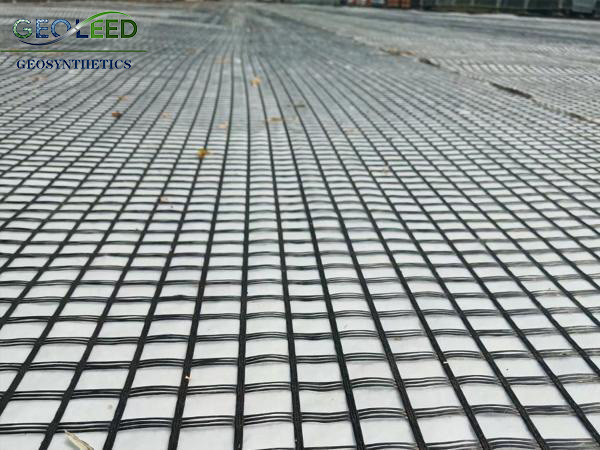
Soft Soil Foundation Subgrade Reinforcement: Especially for projects with extremely strict settlement requirements, such as high-grade highways and high-speed railways.
Retaining Wall Reinforcement: Used to construct taller and steeper reinforced soil retaining walls, saving land area.
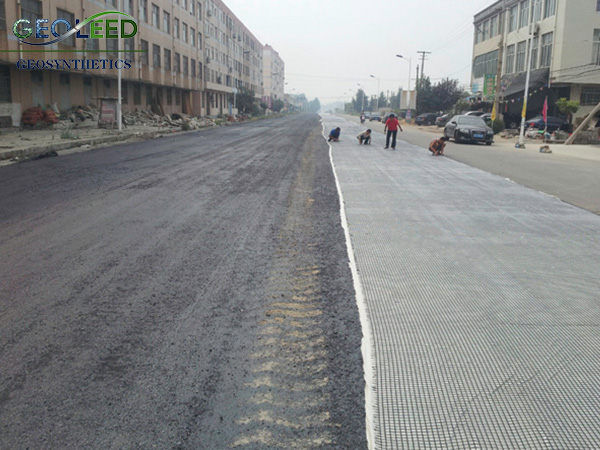
Road Widening: Paved at the junction of new and old roads to prevent longitudinal cracks.
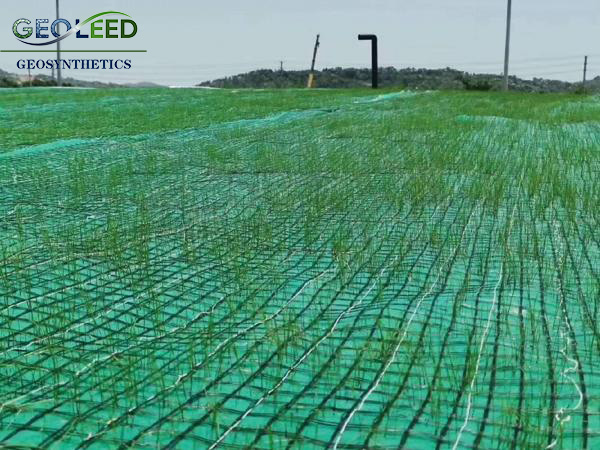
Establishments and Slope Protection: Increase slope stability and prevent landslides caused by water erosion.