
The Future of Soil Stabilization
Triaxial geogrid
Product Introduction
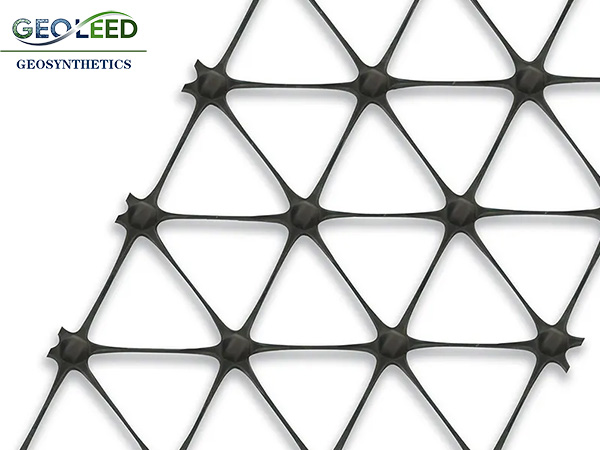
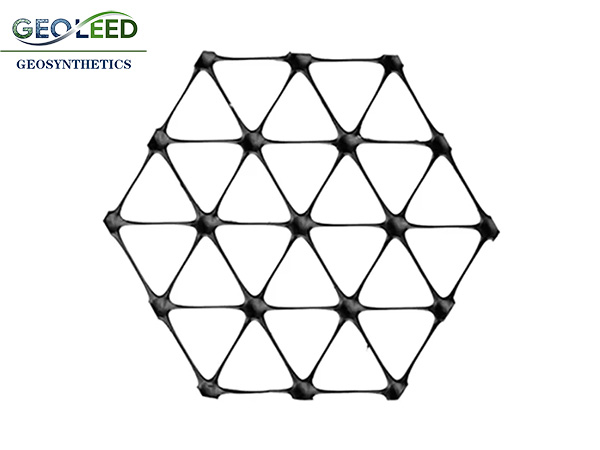
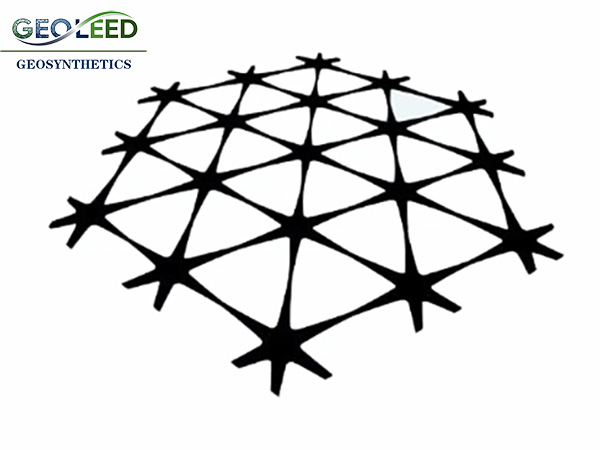
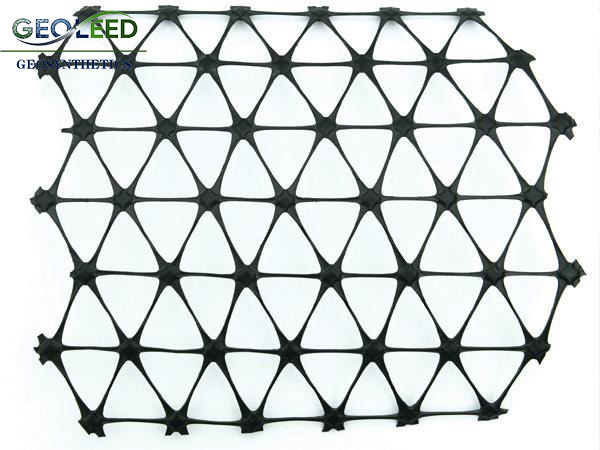
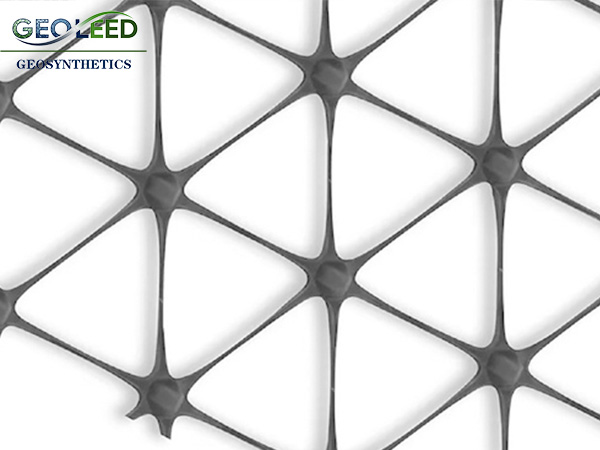
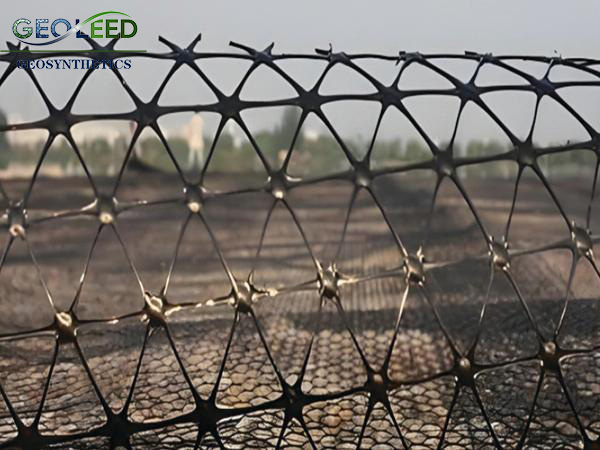
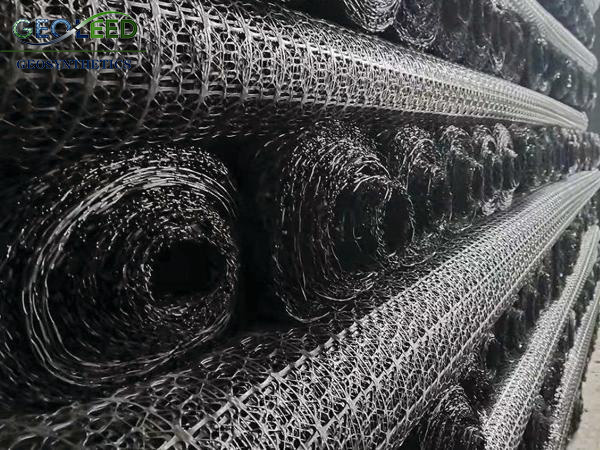
Triaxial Geogrid is an advanced geosynthetic material featuring a unique triangular structure, manufactured from a punched polypropylene sheet oriented in three equilateral directions. Unlike traditional biaxial geogrids, the triangular apertures provide high radial stiffness and multi-directional stability. This design creates a more efficient “confinement effect” for aggregate particles, significantly improving the bearing capacity of weak soils.
Product

Case
Working principle
The performance of Triaxial Geogrid is based on the principle of Mechanical Interlock and Lateral Confinement:
360° Load Distribution: The triangular geometry provides near-isotropic properties, meaning the grid resists stresses equally from all horizontal directions, unlike rectangular grids which are strongest only along two axes.
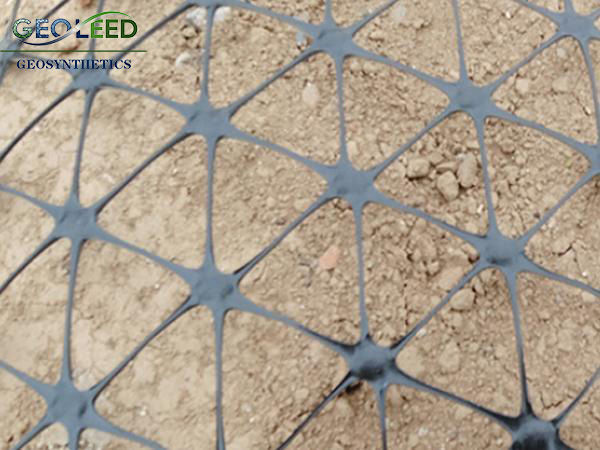
Enhanced Interlock: The ribs of the geogrid act as a “lock,” trapping the aggregate (stones/gravel) within the apertures. This prevents the lateral displacement of particles under heavy wheel loads.
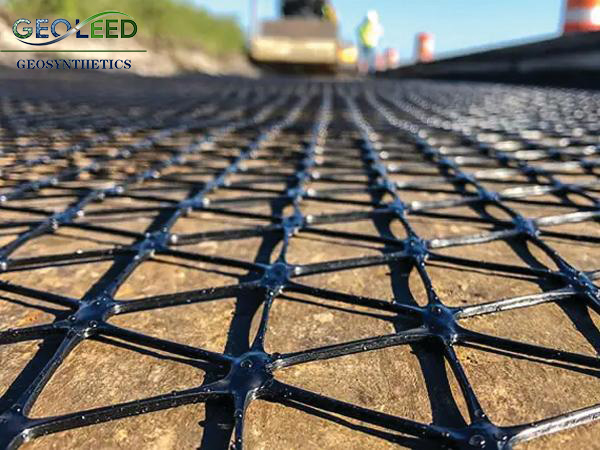
Stress Dispersion: It transforms a concentrated vertical load into a wider, distributed horizontal load. This reduces the pressure exerted on the subgrade, preventing rutting and surface deformation.
Compared to traditional bidirectional bar grids, tridirectional bar grids offer significant advantages in practical engineering:
Thinner subbase: To achieve the same load-bearing capacity, tridirectional bar grids can reduce the thickness of the crushed stone fill by approximately 30%-50%.
Higher fatigue resistance: Under cyclic loads (such as on busy highways), the joints of the triangular structure are less prone to loosening.
Easy construction: No need to consider the paving direction (due to isotropy), reducing the error rate during construction.
APPLICATION
Pavement Subgrade Stabilization: Used under highways and airport runways to reduce the required thickness of the aggregate base.
Heavy-Duty Pavements: Ideal for ports, intermodal hubs, and industrial yards that handle massive point loads from cranes or heavy machinery.
Unpaved Roads: Provides stability for access roads in mining, oil and gas, or forestry operations over soft ground.
Working Platforms: Creates a safe, rigid base for piling rigs and heavy equipment on construction sites.
Railroad Ballast Stabilization: Reduces the frequency of maintenance by maintaining the geometry of the track ballast.